Monthly archives: November, 2025

Mandatory Return Fees for Online Fashion? What the New Dutch Study Really Tells Us
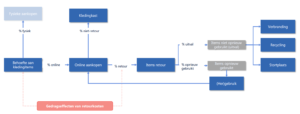
A new government-commissioned study examines whether the Netherlands could introduce mandatory return charges for online clothing and the environmental impact that would have. While the concept seems simple, the findings are far more complex and highly relevant for e-commerce leaders. Returns: a structural and costly habit Free returns have become the norm: 71% of Dutch …

Europe’s ZE-Truck Crossroads: Why It Matters

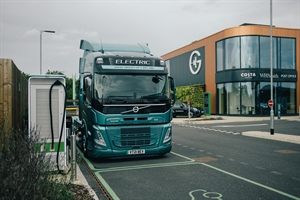
The European truck industry stands at a critical turning point. Transitioning to zero-emission (ZE) trucks is no longer just a climate ambition. It has become central to preserving the sector’s long-term competitiveness. McKinsey identifies three interlinked pillars that must advance together: a competitive and broad ZE-truck offering, a robust charging and refueling infrastructure, and enabling …

ACEA Europe’s vans are falling behind. And that directly impacts city logistics

The electrification of light commercial vehicles (LCVs) is progressing far too slowly to meet Europe’s climate targets. That’s not just a policy issue—it’s something cities experience on the ground every day. Despite growing manufacturer investment and an expanding range of electric models, real-world adoption is lagging. ACEA’s new position paper makes it clear: at the …

Parcel Lockers InPost: Polish Logic, Dutch Illusions

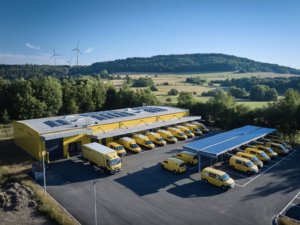
In Poland, parcel lockers are as standard as ATMs. Some 25,000 units cover the country; at supermarkets, between apartment blocks, on busy street corners. Enter a code, the door clicks open, done. InPost, the yellow icon of Polish e-commerce, turned lockers into national infrastructure. CEO Rafal Brzoska already believed in 2009 that home delivery was …

Battery-electric trucks, collaboration, and charging infrastructure: insights for the freight transition

Battery-electric trucks (BETs) are widely seen as a core pathway to decarbonising heavy-duty road freight, but large-scale adoption remains difficult. A recent study examines how collaborative logistics, smart routing, and targeted policies can accelerate BET deployment for trucks used in middle-mile and long-haul operations—while managing costs and operational constraints. The research combines a new electric …

Safer trucks, fewer victims: what London’s Direct Vision Standard means for road freight

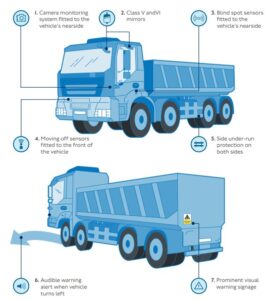
London is showing that safer trucks save lives. New data released during Road Safety Week confirms that the city’s Direct Vision Standard (DVS) for heavy goods vehicles is driving a dramatic improvement in safety for vulnerable road users. Since DVS was introduced in 2019, deaths and serious injuries involving pedestrians, cyclists, and motorcyclists in collisions …

Why Last-Mile Delivery Should Be Part of Street Design

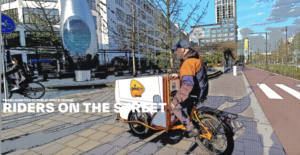
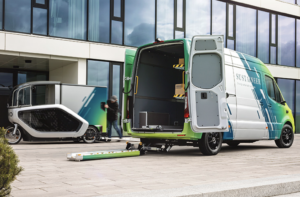
E-commerce and new delivery trends are reshaping how our streets are used — and how they feel. Delivery vans, cargo bikes, and couriers now compete for curb space that was once reserved for pedestrians, cyclists, and social life. The rise of last-mile logistics is no longer just a transport or technical challenge; it’s an urban …

Smart Charging, Smarter Logistics: DHL’s New Energy Management Ecosystem Sets a Benchmark for E-Mobility

The electrification of logistics fleets is entering a new phase. DHL Group’s Post & Parcel Germany division, together with its e-vehicle subsidiary StreetScooter and engineering partner IAV, has completed the rollout of an intelligent charging and load management system for 35,000 electric vehicles across Germany. What started as a pilot with 600 vehicles has now …

A strategic assessment of first-mile post-consumer textile collection strategies

The linear “take-make-waste” model of the textile sector is increasingly recognised as unsustainable. In response, a new paper addresses the first-mile logistics of post-consumer textile (PCT) collection as a critical yet under-studied part of closing the loop. Their work focuses on the strategic assessment of collection value chains: how textiles, once discarded by consumers, are …