Monthly archives: April, 2025

Decarbonising parcel deliveries in England: When the national strategy fails to meet local needs and expectations
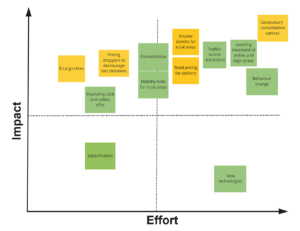
A new research paper examines the views of 35 local authorities in England on potential solutions for decarbonizing last-mile parcel deliveries, focusing on the perceived challenges and drivers of implementation. Using co-design and participatory methods, the study engaged stakeholders with diverse expertise in a back-casting process to develop actionable strategies for reducing emissions. The proposed …

What is the city logistics van of the future?

The light commercial vehicle, or delivery van, is the workhorse of both companies and the self-employed in the economy. And with good reason: it is a multifunctional and flexible mode of transport and compared to (smaller) trucks and cars it is also cheap to buy and use. Moreover, a ‘lighter’ drivers license B is sufficient to drive …

Assessing urban freight tours: a machine learning and life cycle sustainability assessment

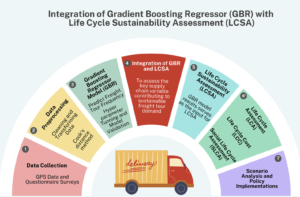
A recent study aims to assess urban freight tours by integrating machine learning with the Life Cycle Sustainability Assessment (LCSA). The research captures supply chain operations using the Gradient Boosting Regression (GBR) model, real-time data from surveys, and Global Positioning System (GPS) tracking. These predictions were analysed using LCSA to assess the sustainability impacts of …

E-lcv’s in residential areas?

Approximately 40% of vans are parked outside business parks, often at the homes of self-employed workers or employees. Only 20% of these households have a private driveway; the rest rely on public charging infrastructure. Vans typically charge in the evening or at night and have a higher charging demand than passenger cars. For municipalities, this …

France advances circular economy with EPR for construction waste

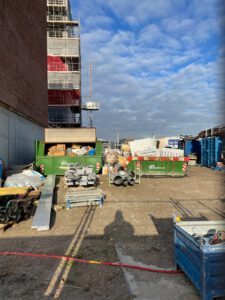
In France, national and EU-level regulations guide the recycling of construction and demolition materials to foster a circular economy and reduce environmental impact. The Anti-Waste and Circular Economy Law (AGEC Law) was a key milestone introduced in 2020. This law established Extended Producer Responsibility (EPR) for building materials, making producers accountable for the entire lifecycle …