Monthly archives: March, 2026

The Price of Green: How Surcharges (and Smart Messaging) Can Shift Consumer Delivery Choices

Summary of: Kokkinou, A., Quak, H. & Mitas, O. (2026). “Leveraging fairness to nudge consumers towards more sustainable last mile delivery options.” Transportation Research Interdisciplinary Perspectives, 37, 101956. Every time a consumer clicks “next-day delivery,” they make a choice with real urban consequences; more vans, more congestion, more emissions. Getting consumers to voluntarily choose slower, …

Which Last-Mile Innovations Actually Work? New Delphi Study Ranks 13 Solutions for Urban and Rural Areas

As e-commerce volumes grow and decarbonisation pressure intensifies, the question of which last-mile logistics innovations are worth investing in has never been more pressing. A new peer-reviewed study published in the European Transport Research Review offers some of the most structured expert guidance to date — and the findings may surprise both logistics operators and …

Rethinking Freight with Cargo Sous Terrain: Towards a Multimodal Goods Transport Network

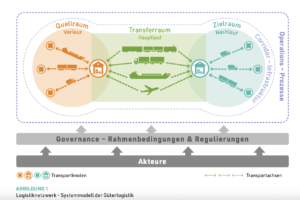
The Cargo Sous Terrain-CST working paper presents a forward-looking vision of a multimodal freight transport system that integrates rail, road, inland waterways, and urban logistics into a coherent, high-performance network. The core argument is clear: current freight systems are too fragmented, too road-dependent, and insufficiently aligned with sustainability and capacity constraints. What does the future …

City Logistics and Urban Hubs: No Silver Bullet, but Context Matters

Urban freight transport is increasingly at the center of policy and research debates, driven by rising e-commerce demand, urban densification, and the introduction of zero-emission zones across European cities. A recent analysis by the Dutch Kennisinstituut voor Mobiliteitsbeleid (KiM) provides a systematic and evidence-based perspective on one of the most discussed solutions: urban consolidation centers, …

Cooperation or competition? What parcel lockers teach us about city logistics

E-commerce has changed urban logistics fundamentally. Orders are smaller, destinations are more dispersed, and customers expect fast delivery within narrow time windows. The result is familiar in many cities: more vans on the streets, lower vehicle utilisation, and increasing pressure on urban space. In his recent PhD research, Fabio Mercurio explores how delivery companies respond …

In memoriam: Hardt Hyperloop (2017–2026)

Some innovations change the world. Others mainly change the way we think about the future. Hardt Hyperloop, declared bankrupt this week, probably belongs to that second category. Yet that does not mean its significance for logistics and transport has disappeared. Over the past years, Hardt worked step by step on that idea. In Veendam, a …

Podcast: the future of city logistics – the Netherlands

This report by the Dutch Topsector Logistiek, &Morgen and TwynstraGudde examines how the growing demand for urban logistics can be efficiently and sustainably accommodated within limited urban space. The authors distinguish between different types of logistics hubs and conclude that carriers’ commercial interests often conflict with municipalities’ societal objectives. Using the Double Diamond methodology, real-world …