Author archives

Disappearing traffic: what do we know for city logistics?

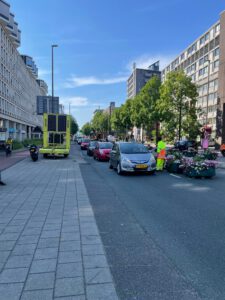
Professionals refer to the ‘theory’ of disappearing traffic in the recent debate about major traffic interventions. After traffic interventions, traffic magically evaporates. What do we know about this theory? A study (by Cairns, Hass-Klau, and Goodwin from 1998) sought to identify possible case studies of circumstances where road space had been reallocated, whether due to …

A robust Euro 7 will substantially improve air quality in Europe

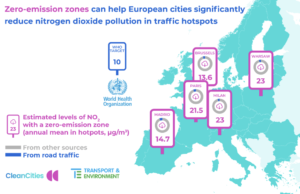
New research by lobby group Transport and Environment debunks carmakers’ claims that Euro 7 standards won’t significantly improve the quality. The truck industry organization ACEA says: ‘Significant progress has been made in the EU on reducing air pollution from vehicles, under the current Euro 6/VI standards. Euro 7 is unlikely to make much more of …

City logistics innovations: how do we value space?

Genuine innovations in city logistics are about sharing. Sharing capacities, vehicles, data, energy, and people. That should start happening in zero-emission city hubs, local neighborhood hubs, and with waterborne transport. Simple, right? But, those innovations often stumble over the distribution of joys and burdens. The public-private revenue models behind them are not obvious (and profitable). …

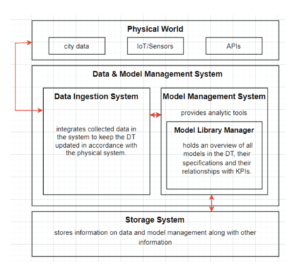
Digital twin applications in urban logistics: an overview

Urban traffic attributed to commercial and industrial transportation largely affects living standards in cities due to external factors like pollution and congestion. To counter this, smart cities deploy technologies such as digital twins (DT)s to achieve sustainability. Research suggests that DTs can be beneficial in optimizing the physical systems they are linked with. The concept …

Zero-emission zones create a non-level playing field for transport companies

Small transport companies that want to transition to electric vehicles will never succeed. But should we want them to? That was an exciting question at a workshop on grid congestion, where companies offering renewable energy were present. The Dutch National Charging Infrastructure Agenda has found numerous solutions to grid congestion. However, those measures come at …

What should be in every local city logistics plan?

Local authorities have five roles in city logistics: regulate and enforce, facilitate, stimulate, coordinate, and experiment. What eight elements should be in every city logistics plan? Those plans should provide clear guidance for companies in, for example, construction, facilities, parcel, service logistics, and circular flows; what is in store for them? What problems do you …

Zero-emission zones: a guide for cities

Though less than 4% of vehicles on the road are trucks, it is estimated that they are responsible for 27% of road transport’s CO2 emissions. As urbanization grows, absolute population numbers and population density continue to rise in cities. Consequently, urban commercial transport is also increasing, exacerbating congestion and harmful emissions. Action is needed to …

DNV presents Energy Transition Outlook for decarbonising transport

Shipping, aviation, and road transport will face profound changes in fuels, electrification, and infrastructure over the next three decades. DNV has quantified this in the annual Energy Transition Outlook. The Transport in Transition is a deep-dive into availability, technology development, costs, policy drivers, and likely uptake of sustainable energy sources in transport sectors through to 2050.  …