Category «Research»
Research: the dark side of city logistics in developing countries
Despite an increase in academic research about city logistics in recent years, the topic of city logistics in cities in developing countries, where some of the world’s biggest metropolitan areas are located, is seldom addressed. A new article by Marei and Savy aims to appraise the unevenness of logistics development throughout the world, by comparing …
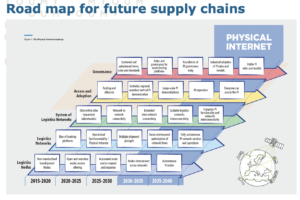
Alice presents roadmap to Physical Internet
In response to the Paris Agreement, more governments, associations, and businesses are setting bold climate targets. As set out in the European Green Deal, Europe aims to be the first climate-neutral continent by 2050. This will be achieved with a two-step approach designed to reduce CO2 emissions by 50%, if not 55%, by 2030. The …
Research: safe use of cargo bikes in city logistics
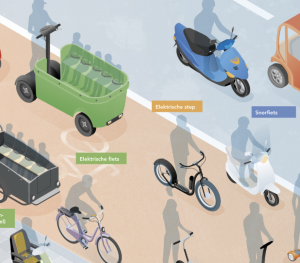
The Dutch Top Sector Logistics follows the developments of cargo bikes as a sustainable logistics alternative in city logistcs. Currently, in most countries, there is very little legislation on the design of cargo bikes in general, let alone freight cargo bikes. There is a lack of standards, so manufacturers develop cargo bikes according to their …
Amsterdam: real-time image recognition for waste collection
Keeping the streets clean in a dynamic urban environment is one of the major challenges facing the Amsterdam City Council. Amsterdam Business School researcher Maarten Sukel developed a system that can recognize waste bags and other unwanted objects lying around in the street. This system can spot the object in real-time and is based on machine …
McKinsey: Why most eTrucks will choose overnight charging
McKinsey estimates eTruck adoption will exceed 30 percent by 2030 across different vehicle classes: light commercial vehicle (LCV), medium-duty truck (MDT), and heavy-duty truck (HDT). McKinsey predicts growth from 2.7 million units by 2025 to 11 million units by 2030 in China, Europe, and the US. This is a result of the alignment of several key …
Electric vehicles, solar energy and storage systems: smart charging needs further research
In a paper by Bracco et. al., an optimization model is defined for the design of a smart energy infrastructure integrating different technologies to satisfy the electrical demand of a given site. The considered smart energy infrastructure includes a photovoltaic plant, electrical storage systems, electric vehicles (EVs), and charging stations.
Research: methodologies for impact assessment of on-site and off-site construction logistics
Urban construction projects are essential in reducing the housing deficit of the latest urbanization trend. As such, construction projects contribute to more attractive, sustainable, and economically viable urban areas once they are finished. However, construction work and construction material flow activities cause severe negative impacts on the surrounding community during the construction process.
SEEV4-City key reports available
The objective of the Smart, clean Energy and Electric Vehicles (EVs) for the City (SEEV4-City) project is to demonstrate smart electric mobility solutions, integrating renewable-energy sources, and encouraging take-up in cities. The SEEV4-City project key reports are available. Head to the publications page for the latest reports.
Obstacles to the adoption of electric vans in France and UK: an operator perspective
Since the mid-1990s European urban freight transport has undergone several major changes with a direct impact on vehicle use patterns. These include freight vehicle downsizing and the dieselization of van fleets (light commercial vehicles or LCVs). Recently, a new possible trend has started to emerge, related to alternatively fuelled LCVs for reducing air pollution emissions …