Tag «charging»

ACEA Europe’s vans are falling behind. And that directly impacts city logistics

The electrification of light commercial vehicles (LCVs) is progressing far too slowly to meet Europe’s climate targets. That’s not just a policy issue—it’s something cities experience on the ground every day. Despite growing manufacturer investment and an expanding range of electric models, real-world adoption is lagging. ACEA’s new position paper makes it clear: at the …

Battery-electric trucks, collaboration, and charging infrastructure: insights for the freight transition

Battery-electric trucks (BETs) are widely seen as a core pathway to decarbonising heavy-duty road freight, but large-scale adoption remains difficult. A recent study examines how collaborative logistics, smart routing, and targeted policies can accelerate BET deployment for trucks used in middle-mile and long-haul operations—while managing costs and operational constraints. The research combines a new electric …

Smart Charging, Smarter Logistics: DHL’s New Energy Management Ecosystem Sets a Benchmark for E-Mobility

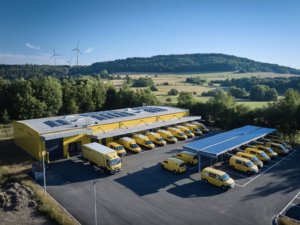
The electrification of logistics fleets is entering a new phase. DHL Group’s Post & Parcel Germany division, together with its e-vehicle subsidiary StreetScooter and engineering partner IAV, has completed the rollout of an intelligent charging and load management system for 35,000 electric vehicles across Germany. What started as a pilot with 600 vehicles has now …

The uneasy phase-out of diesel and the opportunity for a smarter transition to electric trucks

The decision to electrify is logical; almost inevitable. Yet saying goodbye to diesel is far from painless. Those who see the transition merely as adding electric trucks, while neglecting the phasing out of their diesel fleet, risk operational chaos: inefficiencies, reduced CO₂ savings, financial pressure, and a workforce left behind. First, there’s capacity. Halting diesel …

Creating Synergies Between Energy and Mobility

The energy and mobility sectors are increasingly interlinked, offering new opportunities for synergies in infrastructure use. However, the governance processes that underlie such cross-sectoral innovation are often overlooked. This case study examines the intricate decision-making process behind the development of an E-PT-hub. This initiative, undertaken by a Dutch public transport operator, aims to repurpose its metro power …

E-lcv’s in residential areas?

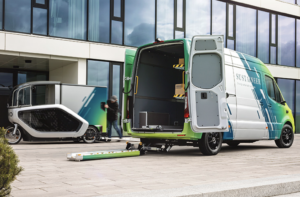
Approximately 40% of vans are parked outside business parks, often at the homes of self-employed workers or employees. Only 20% of these households have a private driveway; the rest rely on public charging infrastructure. Vans typically charge in the evening or at night and have a higher charging demand than passenger cars. For municipalities, this …

Building Europe’s electric-truck charging infrastructure

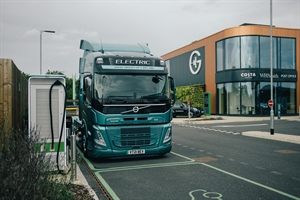
Charging infrastructure has become a crucial aspect of electric trucking. Companies are vying to provide comprehensive solutions, but significant challenges related to vehicles, charging networks, and the electric grid still need to be addressed at scale. According to McKinsey, expanding electric trucks will necessitate a robust charging network in Europe, where an estimated 300,000 public …

PULSe: urban logistics solutions based on Eco-friendly vehicles in Rome

The new PULSe project investigates, analyses, and evaluates to validate the technical-regulatory-operational-behavioral requirements and environmental-economic-social impacts of two public-private, innovative urban logistics solutions in the metropolitan area of Rome. The solutions investigated will be:1. Shared charging/refill stations hub for electric and hydrogen freight vehicles,2. Service trips and reverse logistics with eco-friendly vehicles. In particular, the …

Zero-emission zones create a non-level playing field for transport companies

Small transport companies that want to transition to electric vehicles will never succeed. But should we want them to? That was an exciting question at a workshop on grid congestion, where companies offering renewable energy were present. The Dutch National Charging Infrastructure Agenda has found numerous solutions to grid congestion. However, those measures come at …