
Author archives

Urbanization and the Imperative of Public Space: A Global Perspective
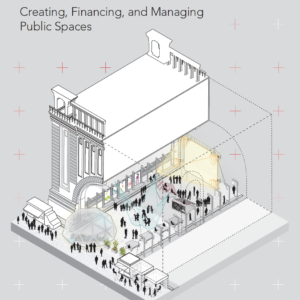
Many cities around the world are missing out on significant development opportunities by ignoring, underutilizing, or mismanaging their public-space assets. Yet there is enormous potential to use these spaces more strategically and to unlock the hidden value they generate for communities, neighborhoods, and cities as a whole. The World Bank’s report, The Hidden Wealth of …
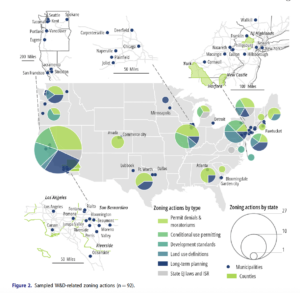
Zoning for Health Equity in Urban Freight: A Critical Opportunity

The rapid growth of warehousing and distribution (W&D) centers across U.S. cities is reshaping urban freight systems. As demand for fast deliveries climbs, logistics facilities are moving closer to residential areas, raising serious concerns about health risks from increased freight traffic. Communities already burdened by industrial activity are particularly vulnerable to the noise, air pollution, …

Crowdshipping in E-Grocery: A Smart Solution for Urban Last-Mile Logistics?

As cities face the dual challenge of growing e-commerce and the need for more sustainable urban mobility, improving last-mile delivery becomes essential, especially in the fast-growing sector of online groceries. A recent study explores how crowdshipping, where in-store shoppers deliver groceries to other customers, can offer a promising alternative to traditional van-based delivery models. Integrating …

Towards Circular Transformation in High-Performance Plastics Waste Management

The CIRCULAR FOAM project’s Deliverable 1.5 outlines a conceptual and dialogue-based framework to advance collaboration and transformation in the recycling of high-performance plastics, with a focus on rigid polyurethane (PU) foam. This report synthesizes insights from earlier project tasks, regional workshops, and a consumer survey across Germany, the Netherlands, and Poland to build a common …

Boston Delivers: A Pilot for Sustainable City Logistics

Between September 2023 and February 2025, the City of Boston tested a new model for sustainable neighborhood deliveries through the Boston Delivers pilot project. This initiative replaced conventional delivery vans with electric cargo bikes to serve local businesses and organizations in Allston, Brighton, and surrounding neighborhoods. The Boston Transportation Department (BTD) partnered with Net Zero …

Rethinking City Logistics: Sustainable Consolidation in Industrial Areas

When discussing urban logistics, the focus often lies on parcel deliveries to consumers—a trend that the rise of e-commerce has amplified. Yet, cities are also home to industrial zones with manufacturers and producers who have very different logistics needs. These areas depend on the timely delivery of bulky, perishable, or production-critical goods. Despite their importance, …

PostNL: USO proposal unworkable, structurally loss-making, and not economically viable

The postal market in the Netherlands is under serious pressure. Declining mail volumes, rising costs, labor shortages, and digitization are making it increasingly challenging to fulfill the universal service obligation (USO)—the statutory requirement to deliver mail nationwide—reliably and affordably. PostNL, which is responsible for this task, has for some time failed to meet the 95% next-day delivery …

Rethinking passenger-vehicle coordination in urban mobility

In the age of smart urban mobility and AI-driven ride-hailing platforms, it’s easy to assume that more technology means better performance. But new research reveals a surprising insight: in some urban environments, old-fashioned, low-tech transport modes can outperform their high-tech counterparts—simply because they’re easier to coordinate. At the heart of this finding is a fresh …

Walking the Last 50 Feet: A Key to Smarter Urban Deliveries

In city logistics, delivery vehicles may get all the attention, but it’s what happens after the driver parks that truly defines last-mile success. A new empirical study in Seattle (USA) reveals the hidden but vital role of walking in delivery operations. It turns out that drivers spend most of their time outside the vehicle, navigating …