Category «Policies»
IFC: climate investment opportunities in cities
IFC (part of World Bank) estimates a cumulative climate investment opportunity of $29.4 trillion across six urban sectors in emerging market cities to 2030. The lion’s share of the opportunity is in green buildings ($24.7 trillion), covering both new constructions and retrofits, as cities race to accommodate their growing populations.
New CO2-targets for LCV’s: just another excuse for not going for zero-emission?
The European Union wants to bring more climate-friendly cars on the road by 2030. New cars should produce 37,5 percent less CO2 than in 2021 (95 grams per Kilometer). For light commercial vehicles, the 2030 target is set at a CO2 reduction of 31 percent. The automotive industry criticized the new rules as excessive and unrealistic.
Safer trucks for New York City
The NYC Department of Citywide Administrative Services (DCAS) announced that the City’s vehicle fleet will transition to using trucks that better protect pedestrians and cyclists. The trucks, known as high vision trucks, minimize blind spots by lowering the height of the truck cab, using additional windows, and reducing the size and height of the truck’s …
Vision Zero: London is making it’s streets safer
Major cities around the world are taking a stand to end the toll of deaths and injury seen on their roads and transport networks by committing to Vision Zero. London is at the forefront of this approach and the Mayor’s Transport Strategy sets out the goal that, by 2041, all deaths and serious injuries will be eliminated …
Research: review of policies and measures for sustainable city logistics in Europe
Sustainable and energy efficient transport of passengers and goods has become a major concern of policymakers worldwide. A new paper by researchers from the University of Maribor and the Institute for Transport and Logistics ITL in Bologna examines the current policies and measures for sustainable urban freight transport in 129 European cities.
Mobility data: what about data privacy, ownership and governance?
The opportunities to improve urban life using data and specifically urban data collected in the physical environment also create new questions and concerns about data privacy, ownership, and governance. But while every city faces these challenges, no city has put forth a comprehensive plan to overcome them and put data to work for urban populations.
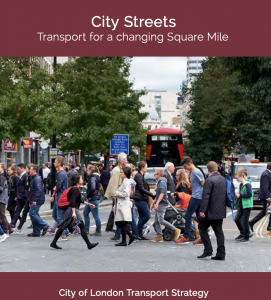
City of London: guidelines for Delivery and Servicing Plans (DSP)
Frontrunners in sustainable urban mobility planning
In order to enable mobility planning authorities across Europe to embrace the Sustainable Urban Mobility Plan (SUMP) as the European-wide strategic planning approach, both the Civitas Prosperity and SUMPs-Up projects consider the role of the national and regional levels as essential for supporting SUMP take-up. This support encompasses governance, financing and capacity building.
Big data in transport: societal and ethical issues
A new report by the Horizon 2020 Research and Innovation Programme ‘Big data in Transport: Research opportunities, challenges, and limitations’ identifies and examines various societal and ethical issues that are relevant to the production of, access to, linking of and re-use of big data in the transport sector.