Category «Research»

Urban delivery company preferences for Green Loading Zones implementation: a case study of NYC

Green Loading Zones (GLZs) are curb spaces dedicated to the use of electric or alternative fuel (“green”) delivery vehicles. Some U.S. cities have begun piloting GLZs to incentivize companies to purchase and operate more green vehicles. However, there are several questions to be answered prior to a GLZ implementation, including siting, potential users, and their …

Identifying the challenges to sustainable urban last-mile deliveries

Urban Freight Lab researchers have published a new paper, “Identifying the Challenges to Sustainable Urban Last-Mile Deliveries: Perspectives from Public and Private Stakeholders,” in Sustainability. This paper is part of the project on Roadblocks to Sustainable Urban Freight, funded by Amazon. Researchers interviewed stakeholders from both the public sector and private industry to identify and understand the barriers …

Research: last-mile capacity constraints in online grocery fulfillment in GB

Forecast growth in e-commerce home-delivery demand provides retailers with opportunities for expansion and increased levels of investment. To maximize these growth opportunities, retailers face operational and logistical challenges related to order fulfillment and the last mile. In contrast to other sectors, many grocers operate a store-based delivery model rather than a separate distribution channel. Researchers …

Research: design of a two-echelon last-mile delivery model

Due to high congestion in cities and growing demand for last-mile delivery services, several companies have been implementing two-echelon distribution strategies over the past few years. Notably, the installation of urban transshipment points has gained increasing attention, used by logistics operators to transfer goods from large freight trucks to smaller and more agile vehicles for …

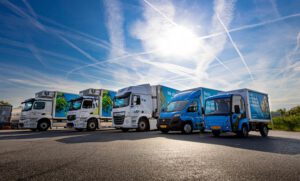
Research: hydrogen versus battery electric

The UK investment in transport decarbonization is more than £27B from the government for incentivizing zero-emission vehicles as part of an urgent response to decarbonize the transport sector. The investments made must facilitate a transition to a long-term solution. The success relies on coordinating and testing the evolution of both the energy and transport systems. …

Research: Location of urban micro-consolidation centers to reduce the social cost of last-mile deliveries

Urban deliveries of goods have become a rising challenge due to the increase of online shopping and the traditional business-to-business (B2B) dynamics. To maintain a satisfactory level of service, carriers must conduct delivery operations under restrictive environments, creating undesirable externalities such as congestion and pollution. Urban micro-consolidation centers (UMCs) are defined as on-street or off-street …

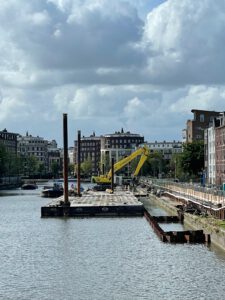
Obstacles prevent waterborne city logistics, but opportunities exist

Construction traffic, garbage, and other deliveries could be run on water in Swedish large cities. But market mechanisms, regulations, technology, problems with quays and old habits stand in the way. This is shown by a pre-study carried out within the Swedish Transport Administration’s industry program Sustainable Shipping, which Lighthouse runs. “The threshold is high for …