Tag «cargo bikes»
Research: algorithm shows the benefits of cargo bike deliveries
Dutch PostNL will introduce e-bikes and cargo bikes for postal services
City logistics: light and electric?
A new publication presents the results of the LEFV-LOGIC project: a two-year research into the use of light electric freight vehicles for city logistics. In this project Amsterdam University of Applied Sciences, Rotterdam University of Applied Sciences and HAN University of Applied Sciences, together with logistics service providers, shippers, vehicle suppliers, network organizations, knowledge institutions, …
London: call for evidence on e-mobility for city logistics
Research: simulation for the integration of cargo bikes in city logistics
Research: decision support systems for urban cargo bike networks
Food delivery services are gaining popularity. To deliver products, horizontal cooperation, e.g. multiple competing restaurants share delivery resources, enables one to reduce costs, and increase logistics performance and service quality. Consequently, numerous logistics providers like Deliveroo, and UberEATS are entering the market.
KoMoDo project in Berlin (D) testing collaborative micro hub for cargo bikes
The KoMoDo roject in Berlin is an effort from the city of Berlin to take a step forward in making city logistics more city friendly. KoMoDo comes from ‘Kooperative Nutzung von Mikrodepots’. And, it’s all about collaboration.
Evaluating the impact of using cargo cycles in city logistics
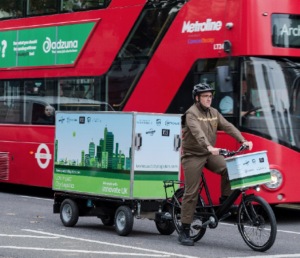
The European Commission has promoted actions and policies with the aim of reducing the negative impacts on traffic and environment caused by city logistics. One increasingly popular measure is the use of cargo bikes in city logistics due to their improved energy efficiency, lower emissions and lower traffic disturbance.
Everything you always wanted to know about cargo bikes…
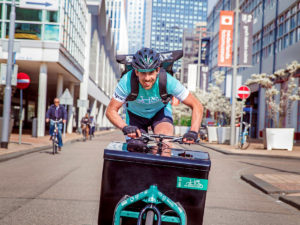
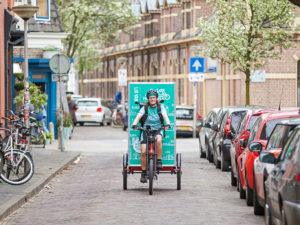
In urban areas light goods are often delivered by heavy vehicles covering only short distances. This is problematic in sensitive inner city areas. The European project Cyclelogistics Ahead, a follow up on the first Cyclelogistics project in 2011, aims at reducing the negative impact of motorised urban freight.