Tag «e-mobility»
UPS: lessons learned on the path to sustainable urban logistics
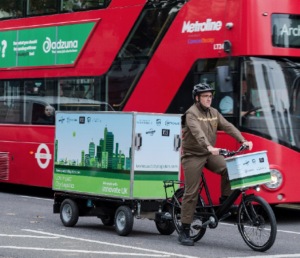
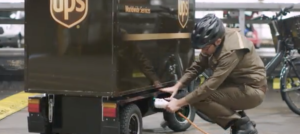
Major European cities have become a testing ground for the next phase of city delivery for UPS. UPS Chief Information and Engineering Officer Juan Perez talked about the future of the UPS network; how they are integrating technology to connect the facilities, fleet, drivers and information systems fueling a more sustainable global network.
Can electric LCV’s work for craftsmen and service enterprises?
Battery Electric Light Commercial Vehicles (BE-LCVs) can reduce the environmental impacts of Craftsmen and Service (C&S) Enterprises transportation, according to a new study by Erik Figenbaum in Norway. These Enterprises produce vital services, using diesel vehicles for transportation of personnel, tools and materials to worksites, thus contributing to pollution and greenhouse gas emissions.
Research: survey on emerging environmental, strategic, and operational challenges in e-mobility
Research: Impact of electric vehicles in collaborative urban transport networks
Transportation is one of the essential services in cities that contribute to the quality of life. As a result, efficient methods for transport planning have become increasingly important. Decision makers have considered collaborative strategies to reduce the overall cost of the supply process and to improve the efficiency and effectiveness of urban logistics systems.
Sustainable vehicles-based alternatives in last mile logistics
The advent of new technologies in last mile deliveries is about to cause a disruption in the traditional business model applied in city logistics. In this context, identifying new business and operations models and vehicles that could be applied for last mile deliveries in urban areas becomes crucial
Electric freight vehicles: insights into decision-making process of frontrunners
To achieve emission reduction targets and to improve local air quality of cities, the uptake of Electric Freight Vehicles (EFV) is essential. Knowledge concerning why companies do adopt EFV is lacking. Research about the diffusion of innovations and the market of EFV shows that frontrunner companies with an innovative or early adopting mindset are adopting …
Pathways to sustainable transport among Norwegian crafts and service workers
The Norwegian Institute of Transport Economics performed a study of Norwegian crafts -and service companies (C&S) that have adopted electric utility vehicles (EUVs) and/or mobile management applications. The results show that MAs largely affects the travel patterns in the enterprises, but the potential to reduce the amount of travel is uncertain.
Supporting e-mobility in city logistics: a multi-criteria analysis of policy measures in Germany
Policies in Germany to support electric vehicles mostly focus on urban road passenger transport. However, road freight vehicles are a main source of air pollutants and noise emissions in cities. Available vehicle types, tour planning and purchase decisions in urban road freight transport differ from the passenger transport segment. The political and scientific literature lacks …