Tag «intelligent access»

Smarter Kerbside Management Shows Strong Results for London’s High Streets

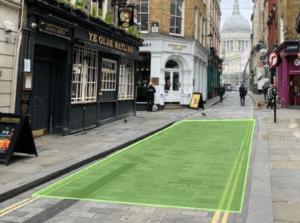
A new report from London’s Cross River Partnership (CRP) highlights how digital kerbside management can transform freight operations and urban air quality. In collaboration with Grid Smarter Cities, CRP piloted a network of eight Virtual Loading Bays (VLBs) across London. Kerbside Management Technology Kerbside Management Technology is designed to dynamically manage urban kerb space, helping …

Smart Access: How Žilina Uses AI to Improve Its Pedestrian Zone

The historic city center of Žilina is taking smart steps to optimize the entry and movement of vehicles through its pedestrian zone. Using data-driven insights and intelligent technology, the city is working to regulate access more effectively, improve urban logistics, and make more efficient use of its limited public space. Researchers analyzed extensive data on …

Smart loading zones: a data analytics approach for loading zones network design

Urban public space commonly accommodates freight delivery operations through on-street (un)loading zones (LZ). Given the scarcity of public space and its demand by various users, city authorities face the challenge of effectively managing LZ by understanding freight curbside needs and utilization. Despite the popularity of technological solutions and enforcement practices among policymakers to capture curbside …

Geofencing for future mobility management

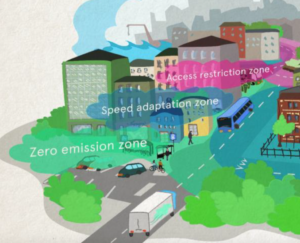
ITS play a growing role in the mobility ecosystem. Cars, public transport, freight, Mobility-as-a-Service, and people and goods are increasingly connected within a collaborative ecosystem with lightning-fast information exchange. This allows us to tackle fundamental challenges in our built environment, such as traffic congestion, noise, pollutant emissions, etc., from a previously unthinkable perspective: dynamically. Geo-fencing …

GeoSence: testing and applying geofencing technologies in cities

The overall objective of the GeoSence project is to design, trial, and evaluate geofencing concepts and solutions for specific cases in cities, within the project and from other previous and ongoing geofencing initiatives and to propose new ways of successfully deploying geofencing technologies. Furthermore, tools for implementation and approaches to scaling up and spreading the …

Cabs and curb allocation: can we learn lessons for city logistics?

The University of Washington Urban Freight Lab released the results of a pilot study on Curb Allocation Change supporting easier and less disruptive passenger pick-ups and drop-offs by cabs. The study tested the traffic impacts of providing more passenger load zones paired with in-app geofencing technology that guided drivers and riders to designated load/unload locations.

Telematics tools to support unloading bay utilization

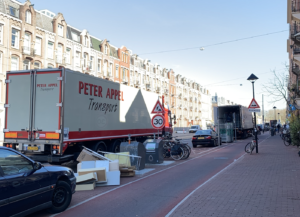
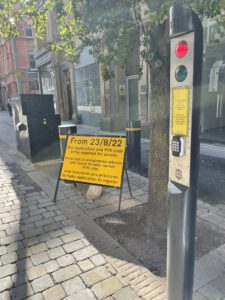
Cities are taking measures to ensure that urban freight runs smoothly. These vary from stricter enforcement of illegal parking on loading and unloading zones and better route information for transporters (ITS) to optimization of delivery times windows. E-mobility will receive privileges in certain zones based on intelligent access.