
Parcel delivery is structurally failing due to a race-to-the-bottom price war that undermines service quality, labour conditions, and customer trust.
Consumers face unreliable delivery, poor tracking, and weak customer service, while retailers’ focus on the cheapest delivery shifts responsibility and accelerates the decline in service.
The sector needs consolidation, fair pricing, stronger collaboration, and accountability from online retailers to restore quality and trust in last-mile delivery.
The parcel market is completely broken. Too much goes wrong structurally: shipments disappear, delivery windows are unreliable, customer service is unreachable, and consumers are losing trust. At the same time, working conditions have been under pressure for years. Flexible contracts, extreme workload, and razor-thin margins form the foundation of a system that is increasingly cracking.
Where is the consumer?
Ironically, parcel companies are stepping back from what they were once best at: home delivery. Consumers are increasingly pushed toward parcel points and lockers. Efficient for operations, perhaps, but a clear decline in service. The core problem is simple: cut-throat competition in a saturated market. Too much capacity, too little margin, and a relentless price war. The result is a race to the bottom in which service quality and labor conditions are the first casualties. This is no longer an incident. This is a systemic failure.
Today, we are waiting at home (and again) for the fourth day in a row for a shipment that DHL was supposed to deliver four days ago. No track, no trace. And that is exactly consumers’ biggest frustration: delivery timing. Time windows keep shifting, deliveries are postponed without explanation, parcels arrive days late, returns are refused, companies are unreachable, and no one takes responsibility. And then the classic message: “You were not at home.” Even though you were. The parcel ends up with neighbors, at a pickup point, or behind the trash bin. Trust disappears with every missed doorbell. That is bad news for online retailers.
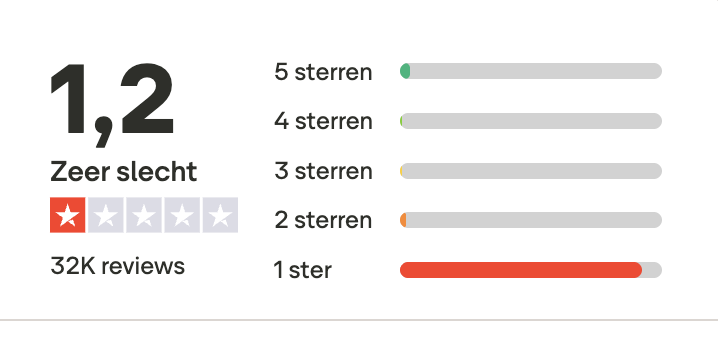
No one is really doing it well. With UPS, nearly half of the recipients experience problems. Dutch PostNL performs relatively better, yet one in three deliveries still goes wrong. Customer service is particularly troubling, with an average rating of just 3.7. Chatbots, canned responses, and endless digital queues. When delivery fails, the solution often fails too. On Trustpilot, PostNL and DHL sit just above the lowest possible rating: deeply inadequate. As the Dutch Consumers’ Association puts it, mistakes can happen, but you must be there to fix them. Too often, companies simply aren’t.
The parcel war
The parcel industry has become a race to the bottom. Online retailers overwhelmingly choose the cheapest delivery option. Understandable from a cost perspective, but disastrous for quality, sustainability, and working conditions. Consumers want scheduled delivery, reliable time windows, safe drop-off, clear tracking, responsive customer care, pickup options, and easy returns. That is not a luxury—it is the foundation of trust.
The key lies with online retailers. They choose their carriers. They promise the delivery. They carry the legal responsibility. Make delivery costs transparent. Refund them when delivery fails. Let customers choose their preferred carrier. Once poor delivery starts costing money, behavior will change quickly.
Only 3 or 4 companies will survive in Europe
The parcel market is approaching maturity. Just as in telecom and energy, there comes a point at which trust matters more than price, and consumers vote with their feet. Widespread dissatisfaction with delivery should worry e-commerce companies, especially as online sales growth slows. The very thing parcel companies should excel at is home delivery. They increasingly seem unwilling to do.
So here is the call to action: stop buying the cheapest delivery and start securing the best. Those who choose quality will play in the Premier League.
Meanwhile, more and more online retailers are building their own delivery networks. Today, in the Netherlands, more vans drive for webshops than for the major parcel carriers. The result is congestion, rising costs, and an unsustainable model in which no one wins. The sector needs strong A-brands, real collaboration across the chain, fair pricing, and decent working conditions for couriers. The couriers the true face of e-commerce. Who will become my future delivery buddy?
Walther Ploos van Amstel.