Category «Policies»

ICLEI: Roadmaps for efficient and sustainable city logistics
A project led by ICLEI (by Local Governments for Sustainability in collaboration with Despacio, Smart Freight Centre, and Zaragoza Logistics Center) helps develop roadmaps for efficient and sustainable urban freight transport. The Ecologistics handbook offers eight principles that aim to inspire and support governments at all levels to transform their urban freight systems through collaborative …


EU proposes law to end green delivery claims

Today, it is difficult for consumers to make sense of the many labels on the environmental performance of products (goods and services) and companies. Some environmental claims are unreliable, and consumer trust is extremely low. Consumers can be misled, and companies can give a false impression of their environmental impacts or benefits – a practice …

How Amsterdam is pushing pedestrians out of the city

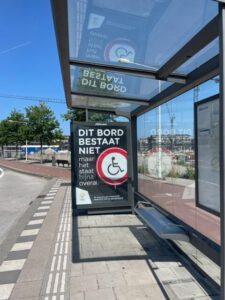
The pedestrian is not getting anywhere in Amsterdam. The new policy framework, Space for the Pedestrian, which should create more pedestrian space, applies only to new situations. Pedestrians will end up with less space, structurally. Citywide, the rules for HoReCa terraces, store displays, shared scooters and bikes, and other objects on the sidewalk will not …

Disappearing traffic: what do we know for city logistics?

Professionals refer to the ‘theory’ of disappearing traffic in the recent debate about major traffic interventions. After traffic interventions, traffic magically evaporates. What do we know about this theory? A study (by Cairns, Hass-Klau, and Goodwin from 1998) sought to identify possible case studies of circumstances where road space had been reallocated, whether due to …

City logistics innovations: how do we value space?

Genuine innovations in city logistics are about sharing. Sharing capacities, vehicles, data, energy, and people. That should start happening in zero-emission city hubs, local neighborhood hubs, and with waterborne transport. Simple, right? But, those innovations often stumble over the distribution of joys and burdens. The public-private revenue models behind them are not obvious (and profitable). …