Category «Research»

DELPHI, FeDerated nEtwork of pLatforms for Passenger and freigHt Intermodality

The DELPHI project aims to tackle key challenges in last-mile delivery and urban logistics—such as high costs, environmental impacts, data fragmentation, and stakeholder misalignment—by integrating passenger and freight transport through a cross-modal, multilevel governance model. Central to the project is the development of a Federated Network of Freight and Passenger Platforms designed to improve data …

Does living near shops change the way we shop?

When it comes to shopping, you might think that living close to stores would make people less likely to shop online. However, recent research surprisingly suggests otherwise. Based on data from a recent study, we found that proximity to a single store doesn’t significantly affect whether someone chooses to shop online. However, being near a …

Crowdshipping: the future of sustainable parcel delivery?

Imagine picking up a parcel for your neighbor simply because it’s on your way home. It may sound unusual, but the concept of crowd shipping is being seriously explored as a smart and sustainable way to complete the “last mile” of a parcel’s journey. TU Delft researcher Patrick Stokkink is diving into how this new approach to delivery could work in …

Strategic fleet replacement for the electrification of heavy-duty road freight transportation

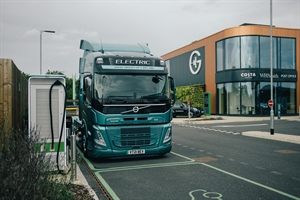
Electric trucks (ETs) offer a promising pathway for decarbonizing road freight transport, yet their integration into logistics company fleets presents significant challenges. Fleet managers must navigate complex trade-offs between investments in electric trucks (ETs) and conventional diesel trucks (DTs), assess the operational impacts of shifting fleet compositions, and plan strategically for depot charging infrastructure. To …

The key role of motorized two-wheelers in boosting the earnings of on-demand delivery workers

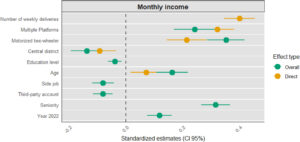
In France, earnings from delivery workers involved in on-demand instant delivery are not well known. Using data from two waves of a survey conducted in Paris with instant delivery workers, this research presents the interactions between types of delivery gigs, operations and vehicles that lead to differences in income earned from delivery. The results show …

What Hamburg can teach about smarter cities: lessons from the MOVE21 Project

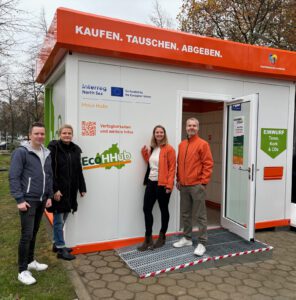
How can cities become cleaner, more efficient, and better connected? Hamburg’s MOVE21 project offers some inspiring answers. In collaboration with the Bezirksamt Altona, the project has developed a Best Practice Manual that examines real-world examples of neighborhood hubs—multifunctional spaces that bring together logistics, mobility, and even social services. Whether placed in existing buildings or public …

Decarbonising parcel deliveries in England: When the national strategy fails to meet local needs and expectations

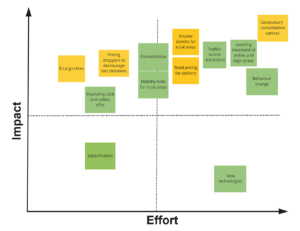
A new research paper examines the views of 35 local authorities in England on potential solutions for decarbonizing last-mile parcel deliveries, focusing on the perceived challenges and drivers of implementation. Using co-design and participatory methods, the study engaged stakeholders with diverse expertise in a back-casting process to develop actionable strategies for reducing emissions. The proposed …

Assessing urban freight tours: a machine learning and life cycle sustainability assessment

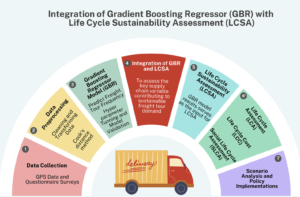
A recent study aims to assess urban freight tours by integrating machine learning with the Life Cycle Sustainability Assessment (LCSA). The research captures supply chain operations using the Gradient Boosting Regression (GBR) model, real-time data from surveys, and Global Positioning System (GPS) tracking. These predictions were analysed using LCSA to assess the sustainability impacts of …

The installation industry: transitioning to smart and zero-emission mobility

The Dutch installation industry has an annual turnover of approximately €33 billion and employs around 180,000 people. About 29% of installation revenue is spent on maintenance contracts, troubleshooting, and modifications such as short-term and customer-specific projects. Around 80-85% of service visits to buildings involve residential properties, while 15-20% concern commercial buildings. Service engineers drive 264 …