The Shift to Software-Defined Vehicles: Implications for City Logistics

McKinsey’s recent analysis of the automotive software and electronics landscape shows that the global automotive sector is undergoing a profound structural shift. Vehicles are rapidly evolving from primarily mechanical products into software-driven platforms. While the traditional automotive market grows at only around 1 percent annually, software and electronics are projected to grow by more than …

AI moves from hype to operational performance in supply chains

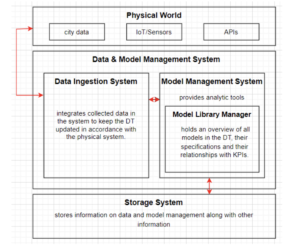
Artificial Intelligence has moved beyond exploratory pilots in transport and logistics. While autonomous trucks and drone delivery continue to grab headlines, the real transformation is happening deeper inside the supply chain stack: in planning, forecasting, routing, exception management, terminal operations, data orchestration, and real-time decision support. The exploratory study on AI in transport & logistics …

Building Beyond Linear: How Circular Construction Will Reshape Space, Logistics and Value Chains

The construction sector is entering a strategic inflection point. Climate adaptation, housing demand, sustainability regulation, material scarcity, energy transition, mobility decarbonisation, and spatial constraints are converging. This combination makes one thing clear: linear construction is no longer viable. The Interreg ASSET project examined how a circular built environment can be spatially, logistically, and economically implemented in Europe, …

Despite Zero-Emission Zones in the Netherlands, Electrification of Road Freight Progresses Slowly

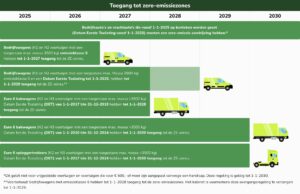
Municipalities often assume that introducing or expanding a zero-emission zone (ZE zone) will be enough to decarbonize urban logistics. The reality is more complex. According to the latest figures from the Netherlands Enterprise Agency (RVO), more than 50,000 electric light commercial vehicles (LCVs) are currently on the road in the Netherlands. Yet adoption is far …

From Moving Traffic to Shaping Cities: Why the UN Decade of Sustainable Transport Is a Once-in-a-Generation Opportunity for Urban Planners

In 2023, the United Nations General Assembly declared the first-ever UN Decade of Sustainable Transport, starting in 2026. This Decade marks a rare political moment in which transport is explicitly recognised as a critical enabler of the Sustainable Development Goals (SDGs). While transport does not have its own standalone SDG, it underpins progress on climate action, …

Is it worth waiting before communicating delivery time windows to customers?

Customers increasingly expect fast and precise delivery information, yet logistics service providers know that committing too early to delivery time windows can seriously undermine route efficiency. A recent paper tackles that tension head-on by asking a deceptively simple question: is it worth waiting before communicating delivery time windows to customers? The authors focus on next-day …

Accelerating ZET Deployment: Complementary Demand-Side Measures

Europe’s transition to zero-emission trucks (ZETs) has reached a decisive phase. While EU CO₂ standards for heavy-duty vehicles are among the most ambitious globally, the pace of real-world deployment still lags what is needed to meet the 2030 target of roughly 35% zero-emission truck sales. The Smart Freight Centre report, with contributions from ACEA and …

A practical methodology for implementing circular solutions

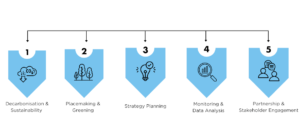
The European Commission’s report, A practical methodology for implementing circular solutions, offers a concrete, operational framework for turning circular economy ambitions into implementable projects at the city and regional levels. Developed within the Circular Cities and Regions Initiative (CCRI), the methodology directly addresses a recurring challenge in logistics and urban systems: while circular strategies are widely adopted …

Europe’s locker potential is trapped in paperwork?

Europe’s last-mile parcel delivery system is approaching a structural breaking point. Rapid growth in e-commerce, driven by platforms such as Amazon, Temu, and Shein, combined with the expansion of recommerce via players like Vinted and eBay, and return-intensive fashion flows from Zalando, H&M, and ZARA, is overwhelming traditional door-to-door delivery and parcel shop models. As …