What is the value of urban logistics by water?

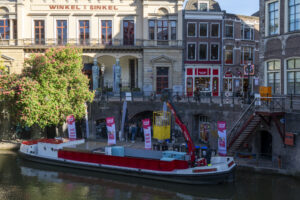
Amsterdam maps the business case for waterborne urban logistics: it is not automatically a ‘no-regret’ option. The City of Amsterdam has been exploring for several years whether water transport can play a larger role in urban logistics. A recent exploratory cost–benefit analysis compared the societal and financial impacts of waterborne transport with road transport and …

Dutch Cities Move to Regulate Parcel Locker Growth

The four largest Dutch cities are working on a covenant with parcel carriers and e-commerce retailers to gain more control over the rapid growth of parcel lockers and pickup points. Dutch newspaper FD reported this today. The trigger is the explosive increase in parcel lockers while municipalities still lack clear spatial planning policies. At the …

Doing more with less: what city logistics can learn from Picnic’s data-driven fleet

Urban logistics is under pressure. Cities want fewer vehicles, lower emissions, and less congestion, while home delivery demand continues to grow. The Picnic case shows that these goals are not mutually exclusive when data, operations, and vehicle technology are tightly integrated. Picnic operates one of Europe’s largest fully electric last-mile fleets, with around 4,500 custom-built …

Electric Trucks Are Entering a Make-or-Break Phase for the Transport Sector

With the new round of the Dutch AanZET subsidy now open, the electrification of heavy-duty road transport is getting another push. It is badly needed. Many carriers still underestimate how fast and how fundamentally the sector is about to change. Decarbonisation requires uncomfortable strategic choices: invest, cooperate, or outsource. Companies without a strategy risk being …

Amsterdam’s Circular Economy: A Spatial and Logistics Wake-Up Call

The Amsterdam metropolitan region faces a major spatial challenge. New housing, the energy transition, green infrastructure, and economic activity are all competing for scarce urban land. At the same time, the city aims to become fully circular by 2050. That immediately raises spatial questions: which circular functions are needed, how much space each requires, and …

Key takeaways from POLIS – ALICE Webinar Series 2025: City Logistics in the Circular Economy

On 9 December 2025, ALICE and POLIS jointly organised the members-only webinar “From Movers to Enablers: the role of logistics in circular supply chains”. The session brought together logistics experts, researchers, and city representatives to explore how logistics service providers can move beyond traditional transport roles and become key enablers of circular economy models.  The webinar focused on the growing importance of reverse logistics in enabling reuse, repair, …

Institutional barriers to dynamic truck charging: why electric road systems struggle in Europe

Electric Road Systems (ERS) – allowing trucks to charge while driving via overhead lines, inductive systems, or rail – are often presented as a promising solution for one of the main bottlenecks in heavy-duty electrification: large battery packs, long charging downtimes, and limited range. In theory, ERS could accelerate the shift to clean regional and …