Tag «city logistics»

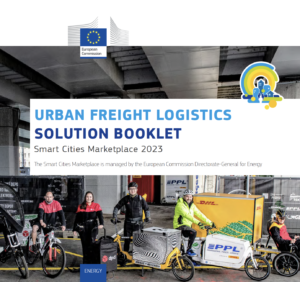
Handbook about urban and periurban logistics real estate

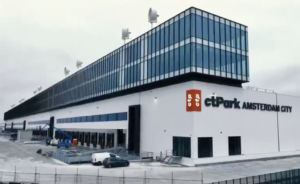
The Logistics City Chair team published the digital version of the handbook n°3 of the “Welcome to Logistics City” series dedicated to urban and periurban logistics real estate.  The development of logistics real estate adapted to professionals and respectful of the requirements of cities has gradually emerged as an adequate response. It allows for mobility optimization and the accelerated decarbonization …

Waste statistics data for urban circular logistics

As appointed in the EU Circular Economy Action Plan, cities and regions in EU member countries start accompanying their circular economy strategies by monitoring frameworks, often called Circular Economy Monitors (CEM). CEMs need to rely on many statistics and datasets to assess performance towards achieving set targets and steer decision-making. Waste statistics play an essential role in …

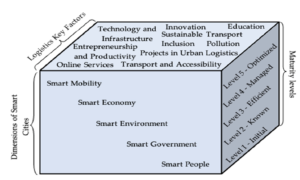
A conceptual model for assessing logistics maturity in smart city dimensions

The advancement of new technologies and the increasingly inseparable presence of logistics systems in the daily life of cities, industries, companies, and society has been modifying how logistics processes are implemented in these environments based on technological innovations, internet, virtual businesses, mobility, and the use of multi-channel distribution. Together with these changes, urban centers have …

EU data on city logistics

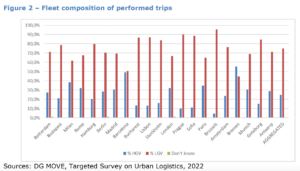
Road transport is an enabler for economic and social life and one of the key sectors of the EU, corresponding to at least 5% of the European Gross Value Added and employing around 10.3 million people. Today, approximately 73 % of the total EU population lives in cities, towns, and suburbs, and the urban population’s …

A framework for city logistics and decarbonization

City logistics must be organized more sustainably and eventually decarbonize. To this end, the focus is mainly on electrification as a technical measure, whereby electric equivalents eventually substitute conventional vehicles. There are, however, numerous decarbonization strategies for city logistics, some of which aim to reduce the number of vehicle movements by changing demand, more collaboration …

The impact of E-commerce on road safety in Belgium

E-commerce is a rapidly evolving sector. With 94% of Belgian inhabitants having access to the internet, 80%  of them are e-shoppers. Additionally, 7 in 10 Belgians shopped at least once to up to five times during the past three months to the survey conducted in 2021 by EUROSTAT. Impact of e-commerce deliveries The consumers’ convenience …

Research: city logistics and land use planning in education

Supply chains, city logistics, and freight transport have been pressured to improve productivity, quality, and sustainability. But unfortunately, conventional practice methods cannot respond to this industry’s ever-growing challenges and needs. The development of contemporary city logistics education has the utmost importance. New methods/technologies have emerged to respond to this issue, making urban freight logistics a …

EU White Paper: zero-emission urban logistics in major city centers by 2030

The overall goal of urban freight logistics is to provide better and more customized last-time logistic services for citizens, fostering local economic development through local logistics businesses while reducing the negative impact the delivery of goods has on our urban environment. The European Commission shows a clear interest in sustainable solutions for urban freight logistics, …

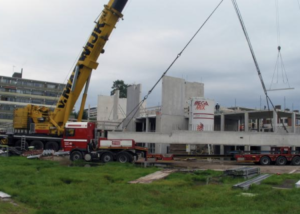
Research: analysis of solutions for sustainable urban construction logistics

Implementation of construction projects is a determinant of the development of modern cities. However, this entails transport for supply purposes, significantly affecting the volume of freight transport in cities. Such a large share translates into a growing interest in more sustainable ways of organizing and providing construction-related transportation. A new paper presents research to build …

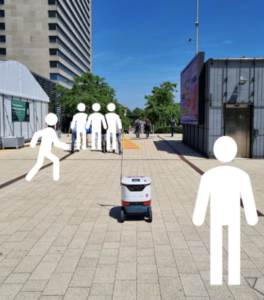
Assessment of readiness of a traffic environment for autonomous delivery robots

Autonomous delivery robots are a promising alternative for last-mile delivery. To realize the successful implementation of delivery robots in public spaces, it is important to study the interaction between robots and the traffic environment. The traffic environment includes the physical infrastructure and the objects using it, like cars and people. New research proposes an assessment …

➤