Tag «city logistics»

HoReCa deliveries in Paris (F): are more regulations better?
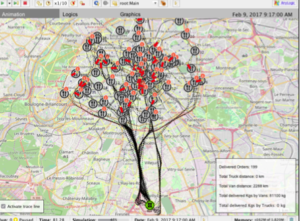
Regulatory policies aim at reducing the negative effects of urban freight transportation, especially those related to traffic, emissions and noise. Nonetheless, stakeholders in city logistics often have divergent objectives, which lead to difficulties upon defining the best possible choices regarding regulation. A new paper on HoReCa deliveries in Paris by MINES ParisTech presents a multi-agent …
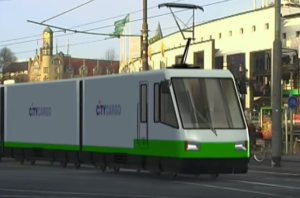
The electric trams moves goods around European cities

Across Europe there are examples of existing tram networks being used to attract businesses to use the network for urban freight transport. Could this extension help make a success of trams in other cities in the years ahead? The Guardian reports about a number of European initiatives in Dresden (D) and Saint-Étienne (F). These cities using …

Research on crowd logistics: an opportunity for sustainable urban freight transport?

Passenger car occupancy has been falling for years. Partly empty vehicles on our road networks decrease passenger transport sustainability but also contain an opportunity for freight transport. Within crowd logistics, delivery operations are carried out by using passengers’ excess capacity on journeys that are already taking place, resulting in economic, social and environmental benefits.

How to organise living labs in city logistics?

The field of city logistics can be characterised by its many local demonstrations and trials, that are quite often not lasting longer than the trial period. The number of demonstrations that continued and were implemented in daily practice is limited. Freight partnerships proved to be a good first step to engage stakeholders.

New Phd-thesis on consolidation and coordination in urban freight

Due to growing urbanization, fragmentation of freight flows, and increasingly strict delivery conditions, cities around the world have to deal with a vastly increasing number of freight transport flows. Carriers are unable to efficiently bundle these flows, resulting in inefficient urban transport. This inefficiency contributes to negative environmental effects such as hazardous emissions, traffic jams, …

Intelligent Access Program to monitor urban freight

The Australian Intelligent Access Program (IAP) is a national program developed in partnership with all Australian road agencies. It uses satellite tracking and wireless communication technology to remotely monitor where, when, and how heavy vehicles are being operated on the road network. It provides an opportunity for transport operators to achieve productivity gains, better turnaround …

➤