Tag «e-trucks»

Depot Charging Demands More Than a Plug: Space Is the New Bottleneck

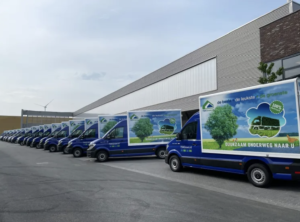
On 30 January 2026, through the distribution market sector of Transport en Logistiek Nederland, we made an inspiring company visit to Lidl Netherlands in Almere. The visit focused on their sustainability vision and the layout of their charging yards. Lidl demonstrated how they have structurally integrated electric transport into their logistics operations and how charging …

Competences Framework: Energy Systems for E-trucks

What competencies should a transport and warehousing professional in a logistics service company have when designing, organizing, and managing energy systems (hardware and data) for the electricification of freight? Strategic, tactical, and operational questions in charging infrastructure Companies will be electrifying their fleets in the years ahead. How do you prepare for that as a …

Modeling the dynamics of freight transport decarbonization: a review and research agenda

The article “Modeling the dynamics of freight transport decarbonization: A review and research agenda” (Tavasszy et al., 2026) examines how existing freight transport models largely fail to address the dynamic processes required to achieve climate neutrality. The core question is not whether decarbonization is technically possible, but how long it will take and how reliably …

Missing the forest for the trees: what road freight decarbonisation research overlooks

Freight transport accounts for a substantial share of global greenhouse-gas emissions and is expected to grow strongly in the coming decades. Against this backdrop, a new paper examines how academic research addresses the decarbonisation of road freight and urban logistics. The results reveal a rapidly expanding field that remains surprisingly fragmented and heavily technology-centred. Rapid …

Electric Trucks Are Entering a Make-or-Break Phase for the Transport Sector

With the new round of the Dutch AanZET subsidy now open, the electrification of heavy-duty road transport is getting another push. It is badly needed. Many carriers still underestimate how fast and how fundamentally the sector is about to change. Decarbonisation requires uncomfortable strategic choices: invest, cooperate, or outsource. Companies without a strategy risk being …

Institutional barriers to dynamic truck charging: why electric road systems struggle in Europe

Electric Road Systems (ERS) – allowing trucks to charge while driving via overhead lines, inductive systems, or rail – are often presented as a promising solution for one of the main bottlenecks in heavy-duty electrification: large battery packs, long charging downtimes, and limited range. In theory, ERS could accelerate the shift to clean regional and …

Decarbonising Heavy-Duty Road Transport: What Pathways Work and What It Means

Heavy-duty road transport is one of the most persistent sources of greenhouse gas emissions, and reducing its climate impact is essential to meeting global decarbonisation targets. In their review in Nature, Zhang and colleagues evaluate the feasibility, economic viability, and emissions reduction potential of key clean pathways: chiefly battery electric trucks (BETs), fuel cell electric …

Financing the Electric Shift: How Smart Leasing Models Can Accelerate Commercial E-Mobility

The global road-transport sector is speeding toward electrification. From delivery vans to heavy-duty trucks, the transition to zero-emission transport is gathering momentum. Yet despite clear climate ambitions and growing regulatory pressure, many operators still face the same fundamental obstacle: the high upfront cost of electric vehicles and the infrastructure needed to keep them running. A …

The uneasy phase-out of diesel and the opportunity for a smarter transition to electric trucks

The decision to electrify is logical; almost inevitable. Yet saying goodbye to diesel is far from painless. Those who see the transition merely as adding electric trucks, while neglecting the phasing out of their diesel fleet, risk operational chaos: inefficiencies, reduced CO₂ savings, financial pressure, and a workforce left behind. First, there’s capacity. Halting diesel …

➤