
If you’ve ever sat through a transport planning meeting, you’ll recognize the pattern. Slides on walking, cycling, public transit, maybe some discussion of electric vehicles, and then, right at the end, almost apologetically: “…and freight.”
Dr Daniela Paddeu has spent her career pushing back against exactly that dynamic. As Associate Professor of Sustainable Freight Futures at UWE Bristol, she’s one of the UK’s leading voices on why goods movement deserves a seat at the table from the very start of any planning conversation; not as a footnote, but as a foundation.
She made that case in a webinar session that’s worth your time, wherever you work in the transport and logistics space.
Freight is everybody’s problem, and everybody’s opportunity. The session opens with a question that sounds simple but isn’t: why does freight matter? Not just to logistics operators and supply chain managers, but to citizens, urban planners, sustainability teams, and policymakers.
Triple Access Planning: a framework worth knowing
The centerpiece of the session is Daniela’s work within the Triple Access Planning for Uncertain Futures consortium, a major pan-European research partnership that’s rethinking how we plan for mobility in an age of rapid change.
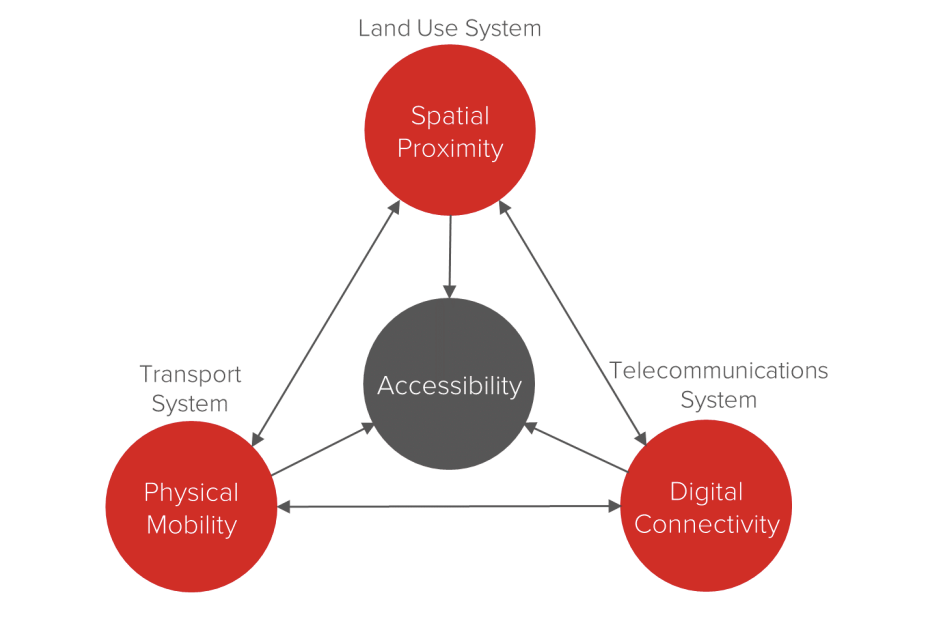
The core idea is that access (the ability of people and goods to reach destinations and opportunities) isn’t just about physical movement. It’s the combination of three things: physical mobility (can you get there?), spatial proximity (is it close enough?), and digital connectivity (can you reach it without moving at all?). Planning that treats these three in isolation produces fragile systems. Integrating them produces resilient ones.
For city logistics practitioners, this framing is directly relevant. Consolidation centers, urban access restrictions, delivery time windows, e-commerce growth, and remote work patterns; all of these shift the balance between the three access types in ways that conventional freight planning models weren’t designed to handle. Triple Access Planning offers a way to think through those shifts systematically, and to make freight a genuine part of the answer rather than a problem to be managed after the fact.
What else is on the agenda
Beyond the consortium work, Daniela will draw on her broader research portfolio (spanning UK and European programs) to illustrate where freight fits within the decarbonization agenda and how it contributes to or undermines the kind of adaptable urban environments that cities are trying to build.
Expect discussion of policy blind spots, practical examples from current research, and a clear-eyed view of what it would actually take to move freight from afterthought to priority.
Parcels?
Unfortunately, Daniela stresses the importance of the ‘growing’ B2C parcel market… B2C parcel deliveries are by far the smallest segment in city logistics. And, not grown in the past five years. City logistics underpins almost everything (the food on shelves, the materials on construction sites, the parcels at the door), yet it remains stubbornly invisible in the frameworks we use to design and manage cities, as Daniela states.
Who should attend
If you work in city logistics, transport planning, sustainability, local government, or freight policy (or if you’re simply trying to make sense of how urban goods movement connects to the bigger sustainability picture), this one is worth seeing again.
Source: CILT